How does the bitcoin halving countdown affect miner rewards?
Miner rewards are reduced by 50% every 210,000 blocks, a protocol rule established since 2009. The bitcoin halving countdown provides real-time data on hashrate and difficulty adjustments to predict these events, allowing miners to forecast revenue shifts. As the block subsidy drops from 3.125 to 1.5625 BTC, miners face increased production costs per unit, forcing efficiency upgrades or operation closures to maintain profitability.
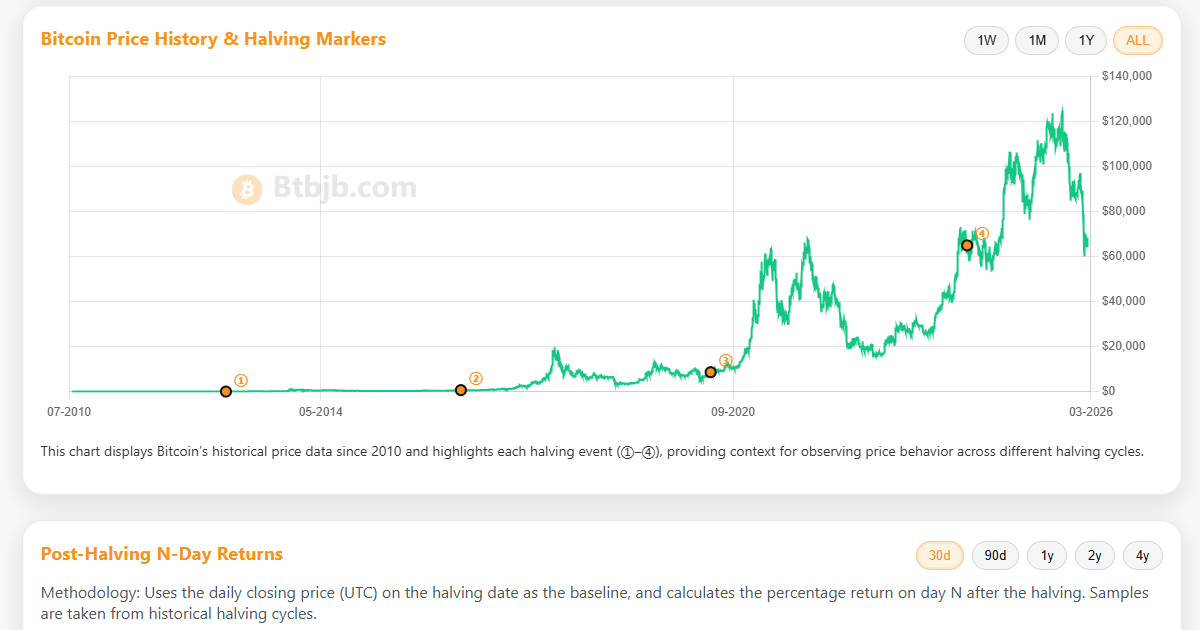
The reduction of mining rewards follows a rigid schedule dictated by the blockchain's block height rather than a specific date. Because the protocol requires 210,000 blocks per cycle, the speed of supply issuance relies entirely on the collective performance of network hardware.
The mining reward system acts as the primary mechanism for distributing new assets into circulation.
Monitoring network hashrate allows for precise tracking of these 210,000-block cycles, providing an objective view of production changes.
As miners track these cycles, they must evaluate the operational impact of having their block subsidies cut in half. When the reward drops from 3.125 to 1.5625 BTC, the cost of generating one unit of currency effectively doubles, unless energy or hardware efficiency improves.
| Operational Variable | Impact of Halving |
| Block Reward |
Reduction by 50% per cycle |
| Inflation Rate |
Percentage decrease linked to subsidy drop |
| Profit Margin |
Decreased if hashrate costs remain constant |
This immediate squeeze on revenue necessitates a focus on equipment efficiency, as miners seek to maintain positive margins against rising production costs.
Efficiency improvements lead to network consolidation, where only the most competitive hardware remains active. Operators must often upgrade to newer, more energy-efficient models to offset the 50% drop in newly minted coins.
Increased operational difficulty serves as a filter, ensuring only high-efficiency participants continue to secure the network.
Following this consolidation, the network's total hashrate often adjusts, reflecting the entry of better hardware or the exit of less efficient entities.
The long-term health of the network relies on these adjustments, which are recorded across multiple historical cycles dating back to 2012. By reviewing the 2012, 2016, 2020, and 2024 cycles, observers can quantify how past miners navigated the transition to lower rewards.
Data from previous cycles shows that miners historically sell a portion of holdings to cover expenses, a pressure that decreases after each halving.
Reducing the daily supply of new coins helps alleviate this sell-side pressure, creating a different environment for market liquidity.
Liquidity shifts are observable through interactive charts that compare historical price drawdowns during these transition periods. When miners face reduced rewards, the market often experiences volatility, with some cycles showing extreme price dips as the network rebalances.
Monitoring the drawdown depth during and after the halving helps participants understand the stress periods for mining operations.
These periods of instability are captured in data visualizers that contrast 2016 and 2020 statistics, providing a basis for understanding risk.
Risk assessment requires comparing these network rewards to traditional macro-economic benchmarks like gold and the US dollar. While fiat currencies face inflationary pressure, the programmatic reduction of the block reward ensures a predictable decline in Bitcoin's inflation rate.
The inflation calculation tool allows for real-time comparison between Bitcoin's declining supply and traditional money supplies.
This comparison reveals the divergence between assets that increase in supply and those with a capped maximum of 21 million units.
To assist with deep analysis, platforms offer comprehensive FAQ sections detailing why the 210,000-block threshold exists. These resources explain technical aspects, such as how the difficulty adjustment mechanism maintains the target block time despite fluctuations in the total number of machines connected.
Accessing accurate historical tables and technical documentation empowers participants to perform their own investigations.
By combining these technical insights with real-time countdown tracking, users can build a thorough understanding of the incentive structure that maintains the network.
Maintaining this understanding is aided by tools that map how long it takes to return to profitability after price drops. Calculating the recovery time for different entry points reveals how the reduction in new supply contributes to the asset's long-term endurance.
The study of time-based recovery metrics provides a different perspective on why the supply schedule is constructed the way it is.
This evidence-based approach helps move beyond subjective sentiment, grounding observations in the structural reality of the protocol's issuance.